
Treating Children
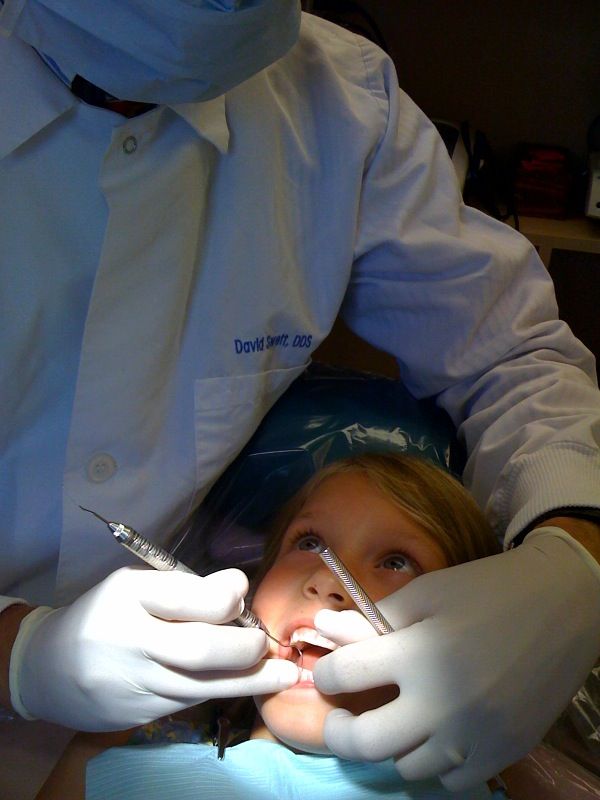
A few things to note in order to prepare your child for their first visit with us:
- Baby or primary teeth need to last children into adolescence so it is important to keep these teeth as long as they are meant to be in the child's mouth. The primary teeth are the space maintainers for the permanent teeth. Premature loss of the primary teeth can result in crowding and possible impaction of the permanent teeth.
- Once the teeth erupt they need to be brushed and flossed daily (yes, flossed!) to prevent dental decay. Until a child is 8 or 9 years old we expect the parent to follow up with brushing and flossing the child's teeth until they can be proficient at accomplishing this themselves.
- We generally take your child's first X-rays starting between the ages of 3 and 5. Cavities tend to start in between the teeth first (especially in infrequent flossers). We want to find the cavities when they are small in order for the cavities to be more easily and conservatively restored.
- In general, we have found most children do best WITHOUT a parent or caregiver in the room. Our hope is to establish a positive 'one-on-one' relationship with your child and instill in them a sense of personal accomplishment and pride in the process of helping us care for them.
- We recommend a fluoride varnish twice a year to reduce the incidence of dental decay. Your child will be able to eat and drink after the varnish is applied, we just ask that you wait 4 hours before brushing their teeth.
- Snacking: The frequency with which children eat is often what increases the incidence of decay. Limit snack times and encourage drinking water rather than juice between meals. We recommend a diet high in natural detergent foods such as apples, carrots, celery, nuts, cheese etc. We also discourage the use of sippy cups and the carrying around of snack bags.
Our mission: treat adults and children in a fun, educational and stress-free environment.